Loading... Please wait...




I'm new! I'm looking for a trainer kite...
I'm looking for a beginner, entry-level power kite for...
I'm looking for a board...
- Home
- Kiteboard
- Learning Center
- Kiteboarding Wisdom & More
Categories
Brands
Current Top Sellers
-
$279.00

-
$389.99$379.99
-
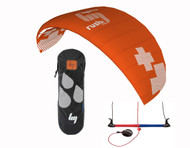 $349.99
-
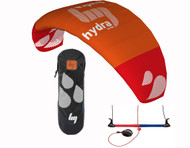
$348.50$345.50
-
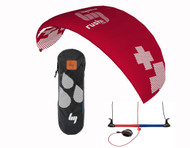
$229.99$218.49
Kiteboarding Wisdom & More
Kiteboarding Wisdom, Kite Etiquette, Safety, Common Sense, Respect the Sport and Keeping the Stoke
Kiting with others... Up-Up, Down-Down, Middle-Middle
- When you are "Up-wind" of another kiter, Keep your kite UP! Above 45 degrees.
- When you are "Down-wind" of another kiter, keep your kite Down low! Below 45 degrees
- When in the "Middle" of 2 kiters... , keep your kite in the "Middle" at 45 degrees (or in between the levels of the other 2 kiters)
Yield Right of Way
In boating the correct terms are give-way and stand-on-vessel.
Since the purpose of this page is all about: Safety, Respect, and Sharing the Stoke, lets keep it simple and use the terms Right of Way, or Preference. "Right of Way" is easy to remember.
Right of Way / Preference should be given to the person or craft with the least maneuverability or mobility.
Example: Kiter and Swimmer.
The kiter has kite-power, is faster, and can jump and change directions quicker than a swimmer. It makes sense that the swimmer would have the right of way since they are the least maneuverable. As kiters, it is our responsibility to get of of their way.
Example: 2 Kiters.
Right of way now depends on international boating rules plus some common sense and a bit respect.
When 2 kiters are head-on and moving toward each other from opposite directions...
The person with their Right Hand Forward (on Starboard-Tack)
has the Right of Way. A very simple way to.. memorize this is..
Starboard Tack = Right hand forward = Right of way
Port Tack = Left hand forward = Left-out, Yield to the other kiter.
Ready for a fun pop-quiz?
Who has the Right of Way?
1. Sailboat or Powerboat?
2. Surfer or Sailboat?
3. Surfer or Windsurfer?
4. Windsurfer or Kiteboarder?
5. Surfer or Kiteboarder?
6. Beginner kiter or Advanced kiter?
7. Swimmer or Surfer?
8. Swimmer or shark?
Answer the above questions in your head.
Then... check your answers below
Answers to quiz.
1. Sailboat or Powerboat?
Sailboat
2. Surfer or Sailboat?
Surfer
3. Surfer or Windsurfer?
Surfer
4. Windsurfer or Kiteboarder?
Windsurfer. ( remember the part above about a little bit of respect? )
5. Surfer or Kiteboarder?
surfer
6. Beginner kiter or Advanced kiter?
Beginner.
This is the part about using some common sense..
Beginners may not technically have the right of way, but they are probably not completely in control of their own direction.
7. Swimmer or Surfer?
swimmer
8. Swimmer or shark?
Yes it's true, the swimmer "should" have the right of way,
but try explaining that to the shark! : )
Kiters should Yield to / Give right of way to everyone else.
This includes ALL Surfers, Body-boarders, Windsurfers, Kayakers, Swimmers, Sun-bathers, Joggers, Spectators, and anyone else nearby.
Kiters have excellent maneuverability and kite-lines can cut through skin.
It's up to us, the kiters, to keep clear, and out of their way.
Be respectful of others and use some common sense.
Don't fly your kite over the heads of innocent beach goers!
People enjoying the beach; kids, grandmas, fisherman, or anyone else that might be on the beach just doing their own thing. Lose the attitude, share a smile, and share the stoke!
Launching - Jumping - Catching Air - Going Huge
LOOK before you Jump.
Check to be sure the area downwind of you is clear.
Allow yourself a large downwind buffer zone.
Yes,.. you should visualize nailing that perfect jump or trick but you also need to be prepared for anything!
Lines and fins can break. You can lose your edge and slide-out in of choppy water. Be sure that you leave some space (a safety buffer zone) on your downwind side.
It's amazing how often I see boneheads throwing down maneuvers with surfers or other kiters that are nearby on their downwind side.
When a kiter who is just upwind of me, and too close, launches big or does a kite-loop "cool" is NOT the word that comes to mind. ; )
Please don't misunderstand, doing tricks in kiting is fun, and fun to watch, as long as the kiter is not putting someone else at risk.
It's all so simple: Use your brain. Kite Etiquette, Safety, Common Sense, a bit of Respect, and a Smile goes a long way. Enjoy!
Why do you think we call them beginners?
When kiting near a beginner stay as far away as possible and expect the unexpected.
Kite Lines on the Beach.
When landing your kite or getting rigged up to ride. Keep your kite lines off the lines of other kites and as much out of the way of other beach users as possible.
Head Tap
If you're on the beach and someone is approaching the beach and tapping the top of they're head. They are signaling you to assist with landing their kite.
Kite Leash
Always use a kite-leash. In other words: ALWAYS USE A KITE-LEASH.
It's important that you have a way to instantly kill the power in your kite.
You need to be a little smarter than that frontal lobotomy patient I saw on YouTube who was advises the opposite.
Kiting without a leash is like driving a wave-runner/ jet ski without a wrist lanyard engine kill. Or could be compared to riding a horse without reigns. Or driving a car with bald tires on a rainy day. Things don't always go as planned, so be prepared and use a kite-leash.
Where to connect your Kite Leash? 3 Places.
- If you're new to kiting and NOT doing handle-passes, The safest option is to connect your leash to the front or side of your harness. (NOT to the rear handle pass leash). Connecting it on your side will allow you to quickly find, and grab, your leash (and it's safety-quick-release) when needed.
- If you're advanced enough to be doing "Handle Passes" then use the Handle Pass leash connect in the back of your Harness. The downside is getting dragged backwards, but if you're an advanced kiter, you already know that.
- If you're a beginner, flying a small kite, and don't own a harness, no worries, just use the velcro-wrist-cuff that was included with your kite. (We hope it was included).
Unpredictable.
You only think you are always 100% in control.
The fact is, you can be hit by an unpredictable wind gust or turbulance, a kite line can break, or a tangle or malfunction can occur. Speak with any experienced kiter;most have a story to tell.
Safety Systems.
Most safety systems work well if you do your part.. Learn, Understand, Check , Test, and Rehearse
Test your kites "safety system" to make sure it works as designed.
Each "session", mentally rehearse triggering your quick-release safety system just prior to launching your kite.
Just before I launch my kite I feel a bit like a gun-fighter in an old western movie, hands hovering over the trigger... "ready to draw".
(grab and trigger my safety-release)
Triggering your safety release should be practiced until...it becomes part of your muscle memory. In a true emergency, you wont have time to think about it.
There are many brands and models. Safety systems are NOT all the same. They vary! Even more reason to know and practice with YOUR specific system.
- Front line releases,
- Back line releases,
- Push-up releases,
- Pull down releases,
- Finger trigger pull pin releases,
- 5th line,
- Mini 5th,
- Kites that sheet out to kill the power, and others that sheet-in ( over-sheet ) to kill the power.
The important point is that you must learn to use the system on YOUR kite. Test it before you need it.
Max Riding distance from the beach.
How far is too far?
I see many kiters riding 1/2 mile out or further.
When riding out, glance back and ask yourself.. "Would I mind swimming this distance back to the beach?"
If your answer is..."NO, I wouldn't want to swim that far!" ..then you are riding out too far.
NEVER kite a longer distance than you care to swim! Things "can" and do break.
Assisted Kite Launching.
When your assistant is holding your kite, be sure to walk back at a 90 degree angle. Initially when setting-up for a launch you want your kite to be UNDER-Powered.
Following this simple rule will allow your kite lines to tighten while your kite is under-powered (kite will be flapping / fluttering a bit ) and giving you a chance to check that your lines are clear, tangle free, and rigged correctly and that everything is correct.
Once your lines are tight, and everything looks good, walk slowly upwind until your kite is trimmed. (stops flapping).
Signal the assistant to release your kite and then steer it up slowly.
If you're kite is launching to your right side at 3:00. Steer it up only to 2:30,
and from there to 2:00, and back down to 2:30 check that it's responding correctly.
The mistake I see, far too often, is the kiter walking back and up-wind of the assistant causing the kite to quickly power-up and launch aggressively before the lines have been double checked.
If your assistant looks like they are wrestling or fighting to control your kite then you are TOO FAR up wind. Walk down-wind a bit.
The person assisting you should NOT have to deal with trying to control excessive power in your kite. If you put your assistant in that possible position, and they release it too early.. don't blame them. YOU are the kiter (pilot) in control.
Much of the above was written regarding inflatable kites. Some of this will also apply to kiting on land as well, but not all of it.